Canada's new anti-spam law, should charities be panicking?

Here is a quote from the Government of Canada’s website:

Canada’s anti-spam legislation (CASL) does not apply to non-commercial activity. Political parties and charities that engage Canadians through email are not subject to CASL if these communications do not involve selling or promoting a product.

There are also further exemptions for situations where such organizations engage in commercial activities with people who have made a donation or gift in the last 18 months, volunteered or performed volunteer work in the last 18 months, or were a member of the organization in the last 18 months. These exceptions apply to registered charities, political parties and candidates in federal, provincial, territorial or municipal elections.*

So messaging your followers about your work is clearly exempt from the new legislation and soliciting donations from recent donors is also exempt. However, best practices always involve assuring you are reaching the people who want to hear from you and not annoying others.  Since there is so much publicity about the new anti-spam legislation, it is a perfect time to get in touch with your contacts, confirm their continued interest and demonstrate your organization’s commitment to effective, considerate communications.
If you have not practiced positive buy-in previously with your email contact lists, then the  high priority task should be confirming that donors and subscribers who fall outside of that 18 month window still want to remain on your lists.
 
* https://www.ic.gc.ca/eic/site/ecic-ceac.nsf/eng/gv00521.html
 

Bound Together

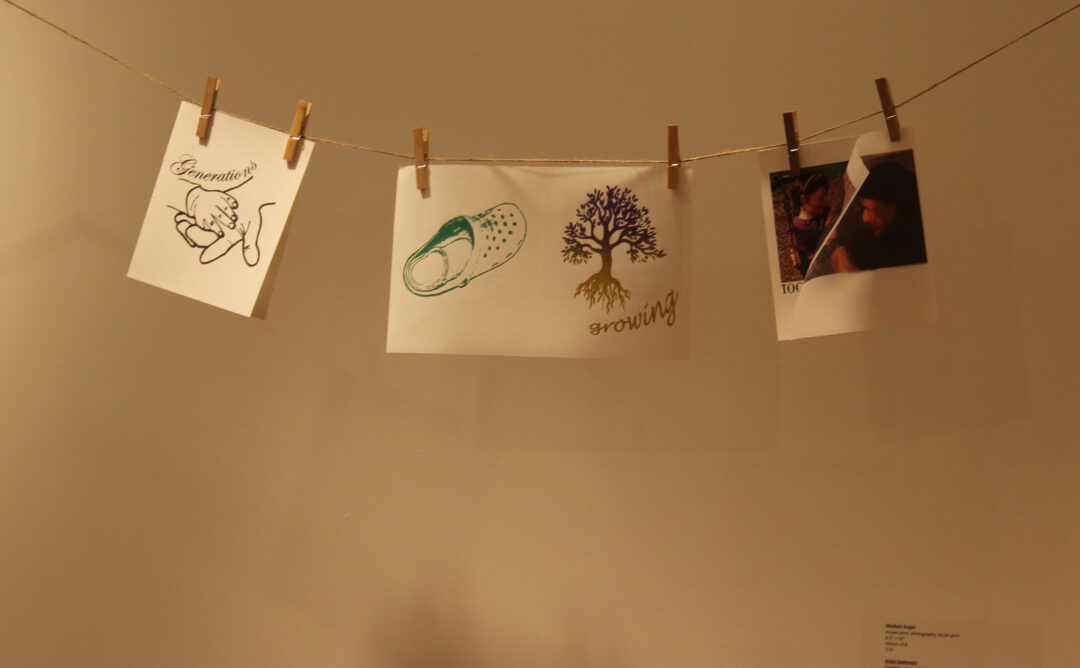
Bound Together: A Community Arts Project

Photo documentation of a community arts exhibit following a 6 month project in silk screen techniques and book binding. 

"Ends Justify the Means" Dilemmas in the Not-for-Profit Workplace

I have been thinking for some time about how we monitor and resolve ethical dilemmas in the non-profit workplace and how we could assure that public money is well-spent.

In the not-for-profit and arts world I believe we set ourselves up to be uniquely vulnerable to the pitfalls of ethical systems based on utilitarianism.  This is the ethical system in which the “good of the many” always outweighs the “good of the few”, a system that becomes challenged when the means are not ethical in and of themselves. In not-for-profit workplaces we think about “Ends” all the time.  Right on the top of all our literature and websites we spell out the “Mission”.  We are focused and passionate about the mission of our organizations, whether it is feeding the hungry, housing the homeless or assuring the survival of a classical orchestra.
Into all this passion and energy for achieving worthy goals comes a number of roadblocks that can make us, as non-profit staff and managers,  feel that government funders, sponsors, regulatory bodies, are treating us unfairly, stacking the deck against the success of our organization to achieve our mission.   Those challenges include: the preference for funding projects and program costs, over needed support for core operations; shifting priorities and programs from governments and foundation funders; narrow program objectives that don’t match the needs of the communities we serve. And some days we feel like if we hear the word “innovation” one more time, we’ll scream.  We twist our programs pretzel shaped to try to qualify for those innovation grants when, really, we think that the way we have always done things is probably pretty soundly based on best practices.


Between the passion to do good and the frustration about roadblocks that seem illogical, unpredictable and insurmountable there sneaks in a philosophy of the “end justifies the means”.

Whether we bend the truth a little bit in our funding application to make our planned activity seem like a better fit, or we move expenses in accounting lines to shift expense from administration to program and marketing, we are embarked on a slippery slope. Tensions mount in organizations when doing whatever it takes to get or keep funding pushes staff members beyond their comfort levels.

These are not victimless crimes.  Public dollars, the reputations and health of workers, the continuation of programs and services that the public counts on are jeopardized when organizations foster a culture of unethical expediency.  Staff members feel helpless in organizations where they are not just asked but required to do unethical things:  back-date mail machines to send in applications after funding deadlines, forge a signature because someone is unavailable, spend all their time working on one project that they are not funded to work on and neglect the work they are funded to do (a common way of shifting funds from one program to the other surreptitiously),  directly shift funds from one program to another without the funder’s knowledge, invent statistics,  report fundraising costs of a special event fundraiser as a “program” cost,  report expenses of one project as the expenses of another, double and triple raise project revenues for one pet project while reporting a reasonable budget in each request, over-spending ridiculously on one area. . . all things that have been sanctioned in organizations I have worked for in the past.   Yet there is little over-sight of non-profits and whistle-blowers at the staff level often have their careers ruined while they sometimes see the non-profit manager who forced the questionable or outright disgraceful practices be backed up by non-profit boards and even to be recognized with national awards.

Any solutions have to deal with both the problem and its causes.

 Adequate funding of basic operations of non-profits that are operating effectively in the public good will stop the need to fudge program costs to cover operations.

I could say that Boards should stop propping up corrupt leaders but . . . that’s not going to happen. The “friends of X” board is alive and well everywhere. I have come to the conclusion that there needs to be tougher regulatory bodies at the provincial and federal level that will investigate allegations of mismanagement of publicly funded non-profits. Working with very well-managed and ethical non-profits has given me  perspective on the insidious harm that unethical non-profits do to workers, funders and programs.


The Rise of Online Applications

Funders seem to love them.  Grantwriters hate them.  Online application processes.

Balky processes:

Recently I completed a “Celebrate Ontario” grant application on the Grants Ontario website.  In addition to the “One Key” Log on for the Service Ontario site there is now an additional log on process for Grants Ontario.  I waited 48 hours before my log in was sent to me after registration. Once on the site I was presented with two options: Complete the application online or download the form.  Since I couldn’t get more than the first page to display online, I chose “download the form”, thinking to email the form to collaborators for input.  HOWEVER, the copies generated by the form were locked pdf’s and it was impossible to convert the document to Word for collaboration.
I tried uploading it back onto the site but there seemed to be no way to save a draft created offline for online collaboration once the form had been downloaded. Submit was the only option after upload.  It was truly infuriating.
 

Wasted time:

In order to work collaboratively it was necessary to copy and paste questions one by one into a Word document and then collect responses and copy back into the document.  Why?  What is fundamentally wrong with allowing organizations to easily share working on a document?
While attempting to complete an application for another program using an online fillable form, the site kept timing out and losing my work although it appeared to be functional until I hit the “save” button.

One size fits none:

Is there anything more infuriating than the “Ping” of a locked form when you have reached the end of your character limit?  Because people, organizations and projects are very different, why not allow them to provide more content in some fields and less in another.  Rigid word/character counts distort project descriptions and rob funders of detail.

Security:

But surely online forms are more secure?  I seriously question that assertion. Recently I submitted an application on behalf of an organization, working as a consultant.  I expected that I would have to verify my ability to file an application on behalf of the organization but in fact no such checks were made.  No signature was required and I could have asked that the cheque by made payable to anyone or sent anywhere.  By contrast, old-fashioned paper submissions required multiple organizational signatures.

Bread and Roses Life, L. Rogers

Founder’s Syndrome

What is founder’s syndrome and why does it affect so many smaller arts and non-profit organizations?

Founder’s syndrome occurs when a founder of an organization is not able to transition leadership style as the organization matures and grows.  The founder continues to operate in the same manner as he/she did in founding the organization, seeking to personally manage every aspect of a growing organization.

The strong entrepreneurial personality that developed a new organization may be unskilled at or unwilling to delegate. The tireless worker that was willing to pull all-nighters to get in last-minute grant applications may be unable to schedule work or effectively manage their time. The genius that came up with spontaneous project ideas may not be willing to work on long-range plans or within budget guidelines. All of the affects of founder’s syndrome results in limiting the growth and effectiveness of organizations and often creates toxic environments for workers, artists, clients. 

We naturally see more of this in smaller organizations because it is such a strong factor in limiting growth.  It is more prevalent in the non-profit sector because while for-profit organizations can be affected by founder’s syndrome, market forces exert limiting pressures on poor leadership.  The for-profit company that cannot grow and change often fails while others are forced to change their ways or leadership to remain competitive.  By contrast non-profits are less subject to market forces and may have difficulty discerning reasons for organizational stagnation or failures. Non-profits are governed by unpaid community volunteers who may feel unable to pass judgment on the workings of an organization that is outside their area of expertise and where evaluation may be more qualitative than quantitative. Volunteer Board Members customarily spend little or no time observing the day-to-day workings of the organization. They may also be friends of the Founder and so not impartial.  They may have been convinced by the Founder that any inquiries about management is “meddling”. Staff and volunteers in the arts and non-profits tend to be very high-minded and mission-driven.  This results sometimes in a willingness to tolerate a sick work environment in a mis-guided idea that it is “for the good of the cause”.

How does Founder’s Syndrome develop in organizations?

Founders alone cannot create an organization with Founder’s Syndrome.  It takes a step-by-step, person by person tacit agreement to cede power to the Founder by Board Members who should be providing governance to the organization.  It also requires funders, volunteers, staff, colleagues and other stakeholders to decide to continue to support the sick organization or to leave silently. Over the years it there may be numerous loud and clear signals that there is something terribly wrong in the organization but no effective action is taken to address the problem or to provide help to the Founder to assist them in developing a more effective leadership style before they stifle or bring ruin to the organization they founded.

What are the symptoms of founder’s syndrome? 

1.  There’s a “friends of the founder” Board of Directors.  The founder has recruited the Board of Directors him or herself (normal in the initial stage of an organization) and the Board has never taken over authority for recruiting new members themselves based on the needs of the organization.  Board members are vetted by the founder and Board Members that try to counter the Founder’s wishes are quickly ejected.  The Board sees their role as supporting the work of the founder rather than stewardship of the organization’s Mission and sound governance of the organization’s work and resources. 
2.  Decision-making within the organization is all controlled by the founder.  Staff either don’t know what’s going on or plans suddenly get de-railed by a decision of the founder.  Ideas that come from elsewhere than the Founder don’t go very far.  Staff become discouraged about offering innovative ideas, stop being pro-active and may even be afraid of the founder. 
3.  Organizational information such as newsletters and brochures contain a lot of information about the founder: personal letters from the founder to supporters, news of the founder’s awards, achievements, pet projects. Board members and staff seem oddly uninformed about the details of project plans, budgets, and any results or evaluation.  Staff cannot articulate processes, statistics or evaluation methods. 
4. The founder often talks about “my vision, my program, my goals” rather than “our goals”.  When asked about rationale for methods it is not unusual to hear, “we have always done X” or “I believe it is best to do Y”.  There is no process for new ideas and methods to be introduced. 
5. There is a resistance to any changes that might create a real or perceived loss of control, e.g. a founder that is uncomfortable with technology will resist the implementation of a user-friendly website that a staff member might be able to create and manage because she/he will feel unable to control the content. 
6. Information hording can occur because information is power. The more threatened a founder is by a staff member, the less likely the founder will be in sharing information with that staff member.

What are the options for an organization That Identifies having a Founder’s Syndrome problem?

1.  If the Founder recognizes the problem, get them help through professional leadership counselling.
2.  If the Founder does not recognize the problem you’ll need buy-in from more than one organizational level to effect change.  Without support from Board, Staff, and Funders you will not be likely to succeed.  Staff driven efforts alone result in Board backed firings that can ruin careers and even the health of staff members summarily dismissed for the efforts to alert the Board to the dysfunction.  Board-driven change processes that lack staff and funder buy-in can result in funding cuts, and/or sabotage at the staff level and ultimately Board fatigue, resignations, replacements.  Funder led calls for reform without organizational support can result in financial hits for the organization but no real change. The organization will find new funding partners or fail, but will be unlikely to effect real change to suit a funder unless there is recognition of a problem.

What are the implications for staff employed in an organization with Founder’s Syndrome? 

1. Recognize that you are in a very challenging environment and you may not be able to effect change.  Go easy on yourself.
2.  Consider your options and prepare your exit strategy even before it’s necessary.
3.  It is unwise to try to effect change in the organization unless there is a Board initiated effort for organizational change.
4.  If you elect to stay in the organization focus on small goals or achievements within your area of responsibility with minimal opportunities for friction with the Founder.
5.  If you choose to whistle-blow, be prepared for a very difficult time and possibly lasting career damage. It might be personally advantageous to simply resign.
6.  Work within the non-profit sector to promote awareness of this problem and protections for workers. 

Grantwriting Basics

Most grant programs are tied to geographic regions

There’s a lot about the process of writing grant applications that crosses international borders and disciplines. I have written successful grant applications since about 1985 for projects as disparate as women’s fitness programs, community centre building upgrades, the establishment of a foodbank, the founding of a community music school, building improvements for a Black History museum, a Jewish children’s theatre production, an outdoor opera festival, a science-fiction themed audience outreach series surrounding a new opera festival, new music commissioning, outdoor music/theatre in the Ontario northwoods, and scores of more conventional arts projects. However most funders tie their programs to a country, a region, a city, so think about your project reach before beginning your search or working with a grant writing consultant.

Since the bulk of my grantwriting has been in the Canadian arts–where I have to assume a type of applicant and type of funder–that will be the basis of my examples. Corporate fundraising uses some of these same techniques but as it is substantially a different process than grantwriting, it will not be explicitly covered in this article. Corporate foundations, on the other hand are foundations and should be handled as a part of your foundation campaign.
 

Identifying Potential Funders

Know your government funders and programs: If you are an arts or non-profit management professional, you likely already know the major funders for your program activities. In the arts at the national level you will be researching programs primarily from Canada Council and Heritage Canada. (From time to time other departments offer programs for foreign travel, international marketing of arts events.) Provincially, you will be looking at provincial arts councils and tourism programs that are available to support marketing for cultural events. Municipally or regionally, you will be looking at the programs of civic, regional, or county arts councils and regional/local tourism initiatives. Don’t be afraid to call the Officers administering the programs to ask what programs fit your activities. Book a meeting with them if you are a new grantwriter, or new to the discipline, organization or geographic area. You may learn about programs that fit your planned activities that you didn’t spot on the website, or in the literature. Establishing a good relationship with your Grants Officer is a really important first step in grantwriting for an organization.
 
  1. Subscription databases: If you can afford them and you don’t have a good list of funder contacts in your organizational records, you may want to subscribe to one of the subscription databases that are out there. They are expensive but it will only take one additional foundation grant that you would not have received to pay for the Bigonline database or Foundation Search Canada . Even one year of a subscription database will help you build your list of funders to the point where you may not need this resource in future years if cost is an issue. Note that these resources are not without some errors. I have found that where my organization has had an active relationship with a foundation, I have often had more accurate information regarding contacts, programs or even contact information changes. Building and maintaining your own contact list geared to your own program relationships/fits is irreplaceable.
  2. Public tax information of charitable foundations: Okay, you can’t afford an online database but you don’t have much of a list of past donors in your organization. In fact the most recent foundation files are dated 1999? Sigh. I have so been there and done that. My commisserations! Here is a real tip. Foundations are in themselves charities. As such they have to file a charitable information return with Canada Revenue. And that return is available to you free ONLINE. You can search the name of any foundation you are interested in, or search on a search term like “Foundation”, or by city, to net yourself a list to browse through. You can open up the information to see who is on the Foundation’s board and which organizations they have given to in the year of the return. See below a screen shot of a search on all private foundations in Ontario sorted by city. All those with icons of returns on the right have accessible returns. Buried deep within the return you will find a list of the projects and organizations funded by the foundation and the amount of each grant. This, together with the listed mission of the foundation, will give you a strong indication about whether this foundation is a fit for your programs and also what level your ask should be at for a program such as yours.

    Finally access the foundation contact information of those foundations who fit and add that contact and any other information about website, deadlines, application forms and process to your grantwriting calendar.Search public and foundation funders of projects like yours: You know who your competition is, who your colleagues are in the community and in neighbouring communities, and a little skill with online search engines and you are able to come up with some unique search terms that will generate a list of programs and services like your own. When you see a pattern of funding projects like your own, pull out all the stops to track that foundation or charitable giving program down. These are key funders with high probability of success. Don’t forget local family foundations: Sometimes we overlook family foundations in our neighbourhoods who may not have a discernible pattern of giving to projects like our own. That is because their giving is focused on all quality of life projects IN OUR BACKYARD. They give a little bit to fitness, some to amateur sport and some to education. If we are looking for “arts funding”, we may never find them. However as the local symphony or community arts organization in their community of interest, we fit solidly within the mandate of their foundation and they want to support us! Don’t deny them the chance to give us their money.

PREPARING ORGANIZATIONAL AND PROJECT PROFILES:

Annually when your next season is well advanced in planning and before the first major operational grants are due, it is a good practice to update Organizational and Project profiles. This main document will be used in the following ways:
  1. As is for press-release backgrounders, potential board members, foundation appeals to foundations that lack a set process, as backgrounders to foundation appeals with more targeted content in the main application.
  2. Tweaked for foundation appeals where the emphasis is on an aspect of the program, expanding some sections, condensing or omitting irrelevant content
  3. As fodder to cut and paste into relevant sections of government grant applications and into the application forms for those increasing numbers of foundations that have a formal application process.

Your organizational profile document will be about 4 to 7 pages long and will include the following, organized into sections and illustrated with photos, charts and graphs as needed:

  1. Mission, Incorporation date and charitable number–if you have a briefer version of your Mission, you may want to use it here.
  2. Brief history of the organization (updated, brief, and engaging)–focus on accomplishments, programs, community impact, staying away from tedious details that are of internal archival interest only. Quotes are great!
  3. Artistic or Leadership statement–Put a photo of your conductor or theatre artistic director beside their own words on what is exciting and valuable about your upcoming program. Don’t under-estimate the ability of Artistic Leaders to frame the importance of their work. If they won’t write something for you, give them a phone call, write down what they said and send it to them for approval. It will help you as a grantwriter. You may be looking at a season that looks like a hodge-podge. You have no “hook” to hang your thoughts on, but when the Artistic Director tells you the season is a “dialogue between the conventional and the new, the audience’s taste and the pressure for artistic innovation”… wow… you are off and running with and angle for your prose.
  4. Main Program Description–Describe your artistic season or core programs. While you might start with brochure content here, don’t stop there. You want to think always from the standpoint of impact. What are the benefits to the community, artists, the art form, ties to education or multiculturalism in your program? How is this program a stretch for your organization, or the artists in your orchestra?
  5. Community Outreach/Education and/or Adjunct Programs–separately describe your audience development and outreach programs. Start with and update the descriptions of annual and recurring programs. Next add what is special and unique about this years programs and share details of one-time programs. Illustrate your content with examples and photos from last year’s successful programs. Include participant’s quotes. Their words are always going to include more weight than yours, no matter how hot-shot you think you are as a grantwriter!
  6. Organization–Who are the key players? Brief bios of artistic leadership and management here. Organizational challenges and triumphs. Any major projects in the coming year. (A Board List will accompany where appropriate).
  7. Financial Position of the Company–If you have a debt, here’s where you explain it. If you have a surplus, here’s where you explain why it is needed and why it can’t be used for operating. Do you need to save to repair the roof next year, or are you on a cycle with a festival every two years? This is only a good news over-view, you’ll need a detailed explanation for funders if you have serious explaining to do. (You’ll attach financial statements where needed).

PROJECT PAGES:

  1. In addition to your main project description prepare single sheets for specific adjunct and optional projects. Are you going to have two composers visit schools next year? Prepare a “Composers in the Classroom” page. Are you going to have musicians from your orchestra give workshops? Prepare a “Young performers workshops” page. Are amateur ensembles going to play before your concerts? Prepare a “Community Overtures” page.
  2. Update or create project pages from the former years projects. If you had a successful collaboration with a youth choir last season, do a one-sheeter on it.
  3. Try to keep your project titles consistent as that will allow you to send three sheets on “Young Artist Spotlight” that detail past and planned activities. Although the activities may have slightly different aspects, the one linking idea–in this example, young artists on the stage–will allow you to build a case for this stream of activity within your organization.

These one sheeters will be used for:

  1. Targetted foundation and corporate appeals
  2. Reports to donors on prior projects funded
  3. Fodder for larger applications
  4. To add to or tweak applications to foundations where added emphasis is needed to match the funder’s priorities or mission.

YOUR GRANTWRITING CALENDAR

  1. You can use MS Outlook, a database, Google calender or a shared spreadsheet to construct an annual calendar for you to chart the deadlines and progress of your grantwriting.
  2. Be sure to keep and include your accumulated knowledge arising from your past successes and failures with the funding body. Many funders ask you when you applied to them last, what for and what was the result.
  3. As you talk to officers, look at websites, add all information into your grant calendar listing. Link to application forms and guidelines where those exist.
  4. Where deadlines are given, you can enter those along with your own projections of when to schedule work on this grant. Many foundations will give vague information such as “meet before the end of each fiscal quarter”. You will have to either find out the deadline or plan to have the application in well before the deadline might be anticipated to fall.
  5. You will determine patterns in your calendar which will allow you to schedule grantwriting weeks where you will lock the doors, turn off the phones for some part of the days and focus on a series of foundation appeals or a major operating grant. In my experience, given basic knowledge and writing skill, the major determiner of a successful grant is the time invested.
 

GRANTWRITING TEAM TASKS:

“Team, what team?” you ask. I smile as I have certainly written many grant applications on my own. However, there are ways to divide up the tasks to work with one or two other staff members in assembling materials for your more major grant applications. Even if it is only you on your lonesome, it may be helpful to you to think of working on your grant applications in terms of these tasks which may be extracted and assigned.

  1. Pre-read grant application forms, program guideline sheets AND final checklists, making a list of everything you will need for the grant. Please note that due to over-sight, omission or sadism, there will often be some item that you cannot get at the last minute which will only appear on one of three of these documents, usually the final checklist. If you only look at that as you prepare to mail your application, you will be up a creek without a paddle. Be sure you have defined the deadline properly: is it “postmarked by X date”, “in our office before 5 pm on X date”, or “in our office before midnight on X date”.
  2. Solicit, acquire and create a file of all needed external and internal documents: These can depending on the program include: financial quotes on equipment you are intending to purchase with grant funds, artistic statements from artistic leaders, signed releases from creative partners, signed Motions of the Board authorizing the application, copies of Letters of Incorporation, signed Financial Statements, work samples on CD’s, copies of scores, letters from references, marketing materials, marketing plans from companies on retainer, resumes of partners, etc. You will want to chart progress on these items to avoid nasty surprises.
  3. Create an electronic “fodder” file: On your computer network create a folder into which you throw copies of all documents likely to be of use to you during the grantwriting process. (You will delete these copies later). This will save you oodles of time in searching and opening and re-opening the same documents as you look for re-useable content. These documents will include your organizational profile, individual program sheets/descriptions. Strategic planning documents. Past grant application to the same government body. Recent grant application to other government bodies. Documents on financial planning. Statistics, budgets, and copies of marketing materials.
  4. Fill in grant cover sheet (get signatures done well in advance).
  5. Create separate documents for your main prose sections for the application.
  6. Cut and Paste–Use your current organizational profile and any other relevant content in your fodder file. Do a rough cut and paste of the material into the program sections where it best fits and might be helpful. Do not worry at this point about duplication. You are merely positioning the material for convenient accessibility.
  7. Statistics and Budget pages: Do these as fully as possible before starting on the prose. You can cut the time you spend on editing prose a lot more easily than truncating the time on stats sheets and Budgets. Trends evidenced in these sheets will help frame the prose.
  8. Write and edit. Self-explanatory as this seems, determine well in advance who the lead writer is and who gets to say, “this is done”. Arguments on these points seem to happen frequently in mid-sized to larger organizations and make a tense process much worse.
  9. Proofread. Note that proof-reading too early in the process wastes time and actually accounts for more error. Get agreement early on this point.
  10. Paper applications: Make the required number of copies and prepare as required. Enter into electronic portal if applying online. 
  11. Checklist of everything submitted before mailing or submitting.
  12. Save a copy to file.
  13. Cover letter or  prepare an email your Officer that you have submitted and thanking them for any help.
  14. Submit, mail, courier or hand-deliver. Nothing quite compares with the festive atmosphere in the line-up at the last post-office open in a major city on the deadline of a major grant. It is a time to meet old colleagues and catch up with the news from last year. But really, we’d much prefer to have been home at 5 pm rather than be in a post office at 10 minutes to 10 pm. Luckily with the shift to online portals, this experience is now rare. 


.


WRITING TIPS

  1. Make a plan: List everything you want to tell the funder in brief points.
  2. Make it easy for them to give you the money by using their language. In addition to the application forms and guidelines that shape your writing, be sure to take time to read annual reports, strategic planning and online copy from your potential funding body. As you read, highlight (or electronically extract if possible) the prose in their documents that resonate powerfully with what you do or are proposing. Put this in your “fodder” file. Organizing your argument under sub-headings that echo their goals and priorities, using their language makes it easy for funders to see where your activities and plans fit their funding priorities. I worked with one great grantwriter who called this, “finding the money words”.
  3. Tell your positive story first. Find several key points in each section that are strong positives. Put them upfront and in strong brief language. Use quotes from stakeholders, partners and leaders to enliven and add credibility.
  4. Address negatives briefly and honestly – move quickly to your positive plans (the only exception to this is applications for organizational effectiveness projects where you are making a case for the needs of your org.)
  5. Keep to length guidelines: Find out how flexible your funding body is in length guidelines. If they have some flexibility, don’t abuse them. Sometimes copy from one question might be adapted and moved to another question that allows for a more lengthy response.
  6. Have you hit all your high notes? Look back at your list from No. 1. In your edits and moving blocks of copy around have you failed to tell some of your positive stories? See where you can fit those missed notes back in.

If you follow all these steps you will maximize your success with funders. Remember that the funders want to give you the money but you have to show them why and how your activities are the best place that they can invest in order to achieve their goals.

CONCLUDING THOUGHTS:

  • Be honest: Any dishonesty or misrepresentation in your application will assure you have a very short relationship with the funder, so you want to be sure that you’ll deliver on everything you have outlined. Also, you will not retain good fund-development staff/contractors if you put their reputation at risk.
  • Don’t forget to file your reports. A part of successful grantwriting is filing reports as required. Eligibility is often dependent upon prior reports. Butn since you are reporting on last year’s activities anyway, to some funders requiring reports, send reports even to those funders that don’t require them.
  • Recognize your funders: assure that funders have the logo recognition and thanks that meets or exceeds the funder’s expectations. Forgetting a logo on your program book today, means you will not want to send that program to the funder with your next application, no matter how good it looks. When logos and thanks are part of your development team plan, meeting your final requirements and giving courteous acknowledgement is assured

Critics At Large: Inspired Flight: Cylla von Tiedemann's What Dances…

What Dances in Between, the title given to Toronto-based photographer Cylla von Tiedemann’s exhibition of dance images at the Al Green Gallery through February 9, captures the essence of the quasi-retrospective as having no strict beginning or end: a creative journey that, like the dancers in her kinetically charged photographs, is caught in mid-flight.” 

Critics At Large: Inspired Flight: Cylla von Tiedemann’s What Dances…: Fire Bird, by Cylla von Tiedemann (Ink Jet Print, 2012, 22” X 33” Dancer’s name: Anastasia Shivrina) What Dances in Between , the ti…

Bread and Roses Life, L. Rogers