Technology in the Arts Conference

It was my privilege to present to people at the Technology in the Arts conference at the University of Waterloo May 9-10 on the subject of classical music in virtual reality.

My introductory presentation can be found here. In addition I have posted my backgrounder document with more detailed technical information here

But the magic really happened when Alessandro Marangoni, stepped up to the real piano in Italy and the virtual piano as Benito Flores and charmed the participants across oceans and media.

Bread and Roses Life, L. Rogers

Rally to save the CBC Orchestra

HUGE RALLY TO SAVE CBC RADIO ORCHESTRA
SUNDAY APRIL 20 AT 2 P.M. AT THE CHAN CENTRE AT UBC

Wednesday April 16, 2008 … Standing on guard for the CBC Radio Orchestra, April 20 at 2:00 pm CBC Radio Two listeners are following up on last week’s successful staging of a coast to coast National Day Of Action to demand CBC brass back down on their apparent systematic destruction of the Radio 2 network and their decision to replace it with programming completely foreign to its core audiences. The rally Sunday is a call to the CBC Board and Management to restore the CBC Radio Orchestra within a revitalized CBC Radio Two.

The rally on Sunday starting at 2:00 pm is an hour before the orchestra’s regularly scheduled, and nearly sold-out, performance at 3:00 pm.

The natural amphitheatre at the Chan entrance is a dramatic location, which will accommodate an impressive number of supporters, while allowing the 1,200 concert-goers easy access.

“It’s not the usual sort of prelude to an afternoon of live music at the Chan” said Canadian Music Centre head Colin Miles. “This situation has become a flashpoint for the general downgrading of CBC by the people who have been entrusted with our precious public broadcasting system.”

“We are seeing the end of a cultural treasure that serves Canadians coast to coast and is an essential player in our musical exports to the world. Elimination of the CBC Orchestra is the destruction of our ability to tell our stories. It amounts to censorship and stifling of free expression of our composers” he stated.

“At 2 cents per year per person, how can CBC management, the board and Parliament agree to this? The issue has now been raised on the floor of the House of Commons and we will be keeping the pressure up.” added Colin Miles.

Three years ago CBC management stopped the CBC Orchestra from working in the studio to record music for broadcast and CDs and told they could only give public performances. Renting concert halls and paying for publicity to promote concerts is expensive. This orchestra has a recording studio that was built for them and well trained creative producer, recording engineer and orchestra librarian on staff. CBC management needs to be reminded what power in creating programming they have by keeping their orchestra. We are calling on CBC to restore the orchestra and get the musicians back into the studio to do what they do best for the benefit of all of Canada. As the CBC Radio Orchestra’s own webpage states “With an audience as diverse as the Canadian experience, we create engaging musical radio programs, commission and perform new works as well as established classics, and showcase exceptional Canadian performers and conductors.”

Rally organized by:
Save the CBC Orchestra Committee
Based in Vancouver, Reaching Across the Country

For more information:
Joan Athey 250-294-6040 to April 18; 604-908-9124 April 18, 19 & 20.
Laurie Townsend 604-822-9161
www.StandOnGuardforCBC.ca

Bread and Roses Life, L. Rogers

Benito Flores; another real musician in Second Life!

Benito Flores in Second Life, known as Alessandro Marangoni, here in real life, has been generously sharing his time and talents with SL audiences over the past few months.
The real life pianist can be viewed here, performing with the Malaga Philharmonic:

YouTube – Malaga Phil. Orchestra – Aldo Ceccato, Alessandro Marangoni

Benito Flores was recently was interviewed and performed on the Second Life cable networks, Music Academy Online program on his life and work as both a real and virtual musician.

Benito also has a blog!

Bread and Roses Life, L. Rogers

Akito Kuramota, a real musician in Second Life


Anyone interested in learning more about classical music in Second Life might by interested in visiting the new My Space page of Akito Kuramoto. There is a little about the artist, but best of all some truly delicious recordings of some selections from his popular recitals in Second Life.

Classical Music in Second Life


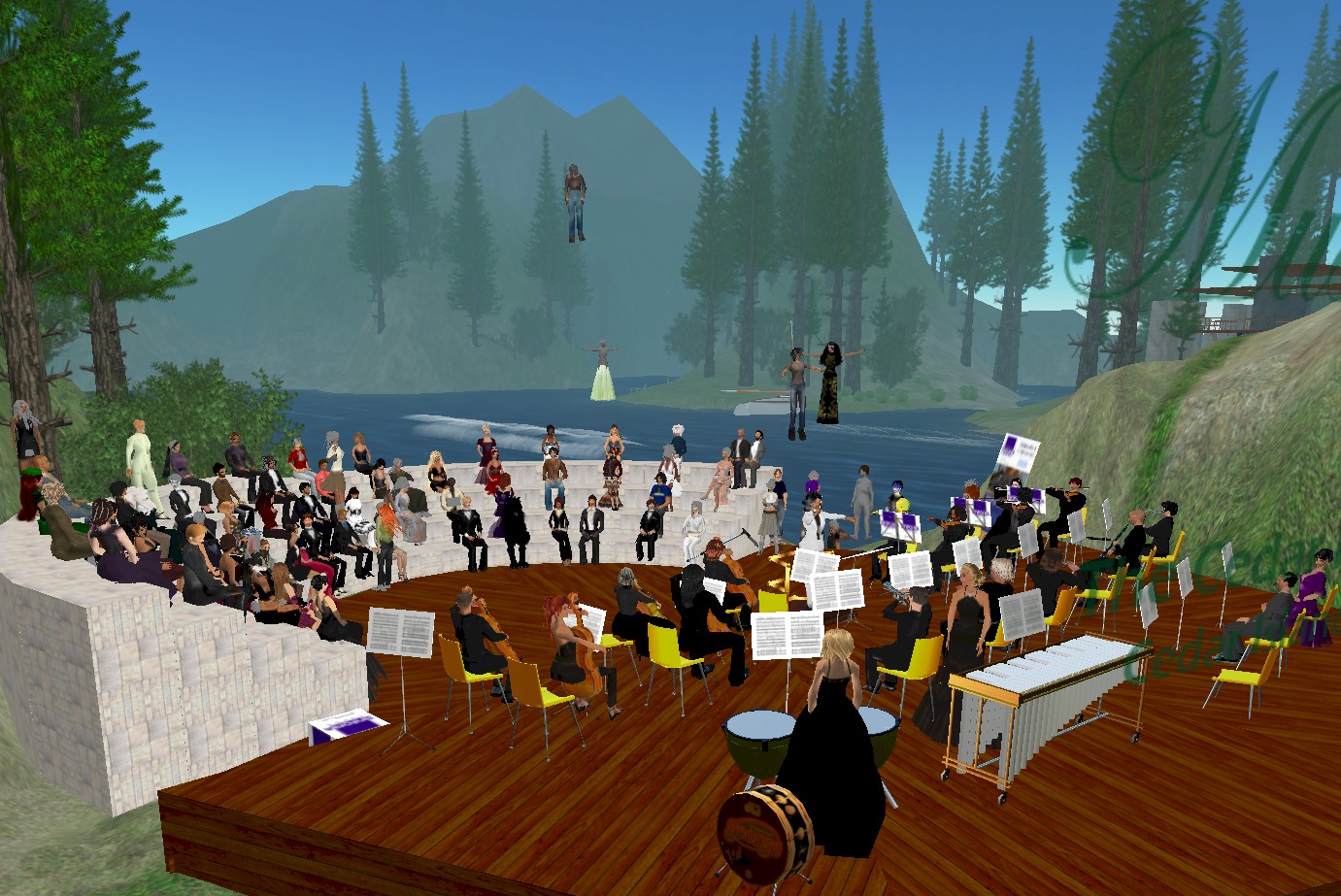
Pictured above, is a “live” concert by British community orchestra Sinfonia Leeds in the virtual world of Second Life. The concert appeared in virtual reality within an open-learning community Cedar Island, where I reside in my Second Life identity as Kate Miranda. Organizing and presenting concerts Music Island is part of my work and play within Second Life.

People unfamiliar with virtual reality usually have a few main questions:

1. How does it work?
2. Why present classical music in Second Life?
3. Who is performing in Second Life and what is there motivation?

How it works:

The performer or ensemble use microphones or instrument pickups to capture a live performance. That performance is encoded as an MP3 stream (usually using one of three popular programs Winamp, Simplecast, or SAM) and uploaded to a ShoutCast server on the Web. Meanwhile in Second Life, a venue owner tunes the media channel the URL to the streamed music.

At the same time the performers are using their computers to position their Second Life avatars to “play” virtual instruments, in fact triggering animations. Performers also can use the stream to introduce their works by speaking into a computer head set microphone or by using their avatars to text introductions.

Why present classical music in Second Life?

Well first let’s deal with the principal objections. The sound is no better than any podcast on the internet and the animations are not really linked with sound production in any way–something some consider a bit of a sham.

Both true.

The principal reason for presenting classical music in Second Life, for me, revolves around the quality of the audience experience. Listening to a podcast or recording is a solitary experience. By contrast, concerts in Second Life are joyfully social, audience members are joyfully celebratory in their anticipation and appreciation of the music in a way rarely matched in real life orchestras. Unique to the medium, listeners silently text appreciative comments, hurrahs, and questions that they hope someone more informed will be able to answer. Sometimes Second Life avatars even decide to dance to the music in the manner of small children at a summer concert at the park.

Conversations quickly reveal that many of those attending classical concerts in Second Life have little or no experience of live classical music. While classical music series are having trouble attracting new audiences to conventional concert stages, it seems that the internet virtual audience is open to the experience of art music. It seems worth it to step into the virtual world to reach out to this new audience.

The other unique element to the SL live concert experience is the accessibility of artists. Performers can view texted messages and questions. They usually engage the audience before and after concerts and sometimes at breaks in the program. This accessibility is as rewarding to the performer as to the audience.

Not to be minimized is the “fun” factor. Even audience members and performers who are regulars in the real world concert hall are amused, engaged and refreshed by the experience of classical music in the context of virtual reality.

Who is performing in Second Life and what is their motivation?


Classical performers in second life range from competent amateurs, music students, music educators, plus emerging and mid-career professional musicians.

Love of the music and interest in virtual reality is common to everyone performing in second life. You have to think it’s just a gas to be bothered. Those without a sense of humour will not be amused.

Some performers find it is a good way to work up new material and play it before a live audience before facing an audience in the concert hall. For students it is a way to get more live concert experience. For educators, a way to keep performance skills sharp.

Performers are warmed by the appreciation of the audience and the sense that they are reaching new audiences.

While some hope to promote real life careers and boost earnings, this last goal is more difficult. The requirement to have a pseudonym in Second Life hobbles name recognition. As Second Life evolves into a serious platform for art, corporations, and learning, this role-play with fictional names seem more and more out-dated.

On Music Island we have been getting around the name recognition issue with posters, T-shirts and even virtual CD stands with links to performers’ real world websites.

Anyone interested in learning more about classical music in Second Life should join the Classical Group in-world. Please contact me–Kate Miranda–if I can help you or answer your questions.

So you want to know how to get more bookings as a classical performing artist?

Daily as an arts manager I receive dozens of unsolicited emails and material from artists I’ve never heard of and those materials are instantly discarded to clear my inbox and desk of excess clutter. Meanwhile I sometimes meet talented artists who ask, “how do I get booked to play more?”

Quite a number of years ago I had my first fulltime job in arts administration in a major US orchestra. I assisted the General Manager in administering the contracting of guest artists. The first thing I was told was to throw out all unsolicited material–no one wanted to see it, or hear it. I was horrified at the waste and for awhile made the effort to return the material–only to be met with angry inquiries and indignant letters about why I hadn’t put the material in the correct hands! Needless to say, from then on I simply trashed unsolicited promotional packages.

So if emails, glossy packages and promotional CD’s won’t get you a booking, what will?

Our business, the music business, is very much a word-of-mouth industry. Most of your bookings are going to come from direct or secondary contacts in the industry so you have to make sure that you make as many contacts as possible and that all those contacts are very positive.

1. The Music Director: When you perform with a conductor, remember that individual is likely also Music Director of 1 or more additional orchestras or ensembles. Find out about those connections, show interest, get details and you may be on the way to a follow-up performance with one of maestro’s other groups.

2. The Orchestra: Remember that many of the musicians in the orchestra have contacts with additional orchestras and ensembles, and may themselves be administering a chamber series in the area. Be cordial and friendly with orchestra members and find out about these networking opportunities.

3. Arts Administrators: Far from all programming decisions are made by Artistic Directors. Often decisions are left up to Artistic Administrators and General Managers, and certainly administrative vetoes are something to be avoided. Unpleasant, pushy, demanding and disorganized guest artists are just unlikely to be invited back. And if you have an agent who falls into this category, you might like to re-think whether that bull-dog attitude is good for you in the long run. If your agent managed to push someone like me into exceeding the orchestra’s capacity to pay or accommodate you in some way this time—enjoy it. You are extremely unlikely to be asked back and word that you are difficult or your agent is difficult will be telegraphed from manager to manager in short order. So unless you are a leading international virtuoso whose whims must be tolerated, think twice about bullying orchestra administrative staff. They will accommodate you once and then write you off the list. Remember that smaller organizations may not be able to provide as much as larger organizations. The simple willingness to take a taxi rather than demand personal airport pick-up will endear you to many a harried administrator’s heart!

4. Other arts organizations. Don’t forget the decision-makers in other local and regional arts organizations when you are performing. Likely you have more complimentary tickets than you can use. Invite decision-makers to be your guests at a performance. Don’t just invite the top people. If they can’t come, invite the Marketing Director, the Arts Administrator, the Program Assistant. Word of your great concert will travel in that organization.

5. Your web site: While aggressive forms of marketing (email spam, mega brochure mailers) are a waste of money, having a good up-to-date, easy to find website is essential in today’s world. When I hear about a potential artist, I immediately Google them. If I can’t find information right away I form a negative impression.

In addition, once I have booked an artist I need photos, bios, quotes from reviews. If they are all on your site, your promotion gets started months before artists who have to be asked for promotional material or who send material in paper format. We are simply too busy to be efficient at re-typing, scanning and editing copy that is in such an inflexible format. If you want to have more control over how your bio is edited, provide a number of “brief bio” options on your site. If you have one two page opus, be prepared to only see the first paragraph or two in print most of the time. If you think that’s your agent’s job, how well are they doing it? If not too well, it might be worth your while to bite the bullet and put your own site together.

6. Reviews–You need them. Post them on your website and circulate to all the contacts that you make in your developing career. Extracting a few choice quotes makes it easy for your bookers to get your promotion off the ground all that much faster!

What do you need to be booked?

1. Talent.
2. Opportunities for decision-makers to hear about your talent directly or through trusted contacts.
3. A comprehensive website for research purposes and promotional purposes. (doesn’t need to be fancy)
4. A professional and agreeable attitude with everyone in the business so you don’t shoot yourself in the foot!
Bread and Roses Life, L. Rogers

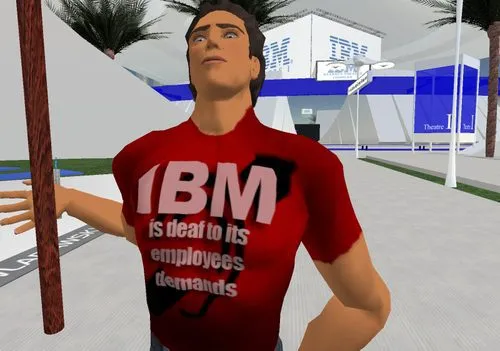
IBM Workers to stage virtual strike in Second Life

The calendar is on the wall for strike planning, the strike headquarters is ready, even the T-shirts on on the rack ready to be donned.
 
It’s just another day in union organizing, right?
 
Wrong.
Because this strike is being organized in virtual reality and some of the strike action will take place there also. You can read all about it here.
 
I spoke to one of the organizers yesterday and the biggest push right now is to get workers who haven’t used Second Life to sign up and get oriented in the world. The global union organization has done a good job of providing bare bones orientation. In fact Linden Labs could take some lessons in concise information as included in the unions sign up kit!
 
Even as I spoke, interested activists were teleporting into the centre from around the globe and offering help to novel action.

The union headquarters can be found inworld at Commonwealth Island 103.171.22


Will the real Second Life please stand up?


Very interesting post yesterday about the myths and realities of the virtual reality world, “Second Life”.


As a habitue of Second Life, I agree with the statements. Second Life is fun, it’s growing and there is a lot worth logging on for!

Yeah, it’s not perfect. There’s a lot of commercialism and seedy stuff that I have no use for but there is also the same heady feel of the early days of the internet. I love what people are doing on “Better World Island” a community for peaceniks and environmentalists full of hopeful displays and opportunities to learn about work going on in international development and conservation.


I’ve recently joined an intentional community on Cedar Island dedicated to exploring some of the positive uses of technology for education and social empowerment.

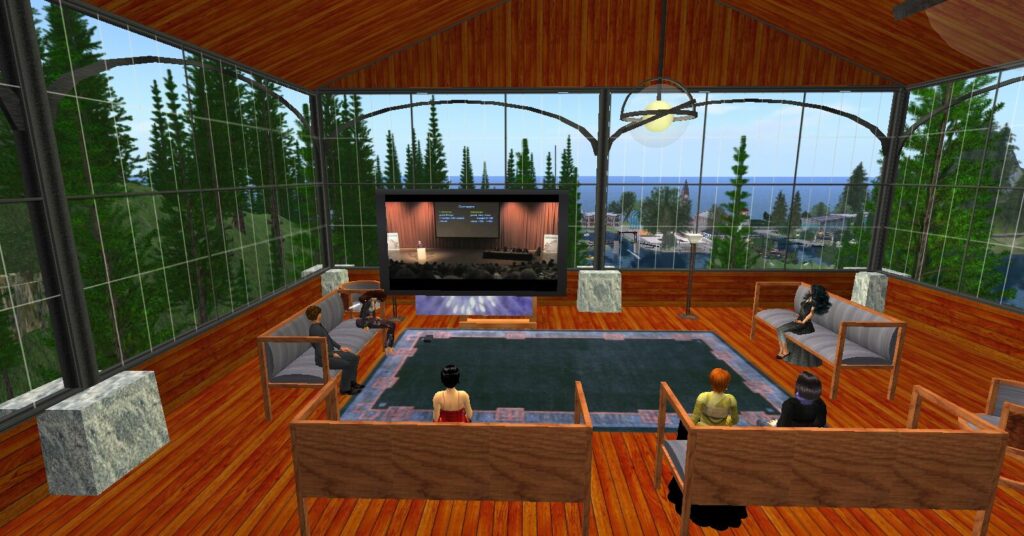
And strange as it seems I also have joined a virtual Quaker Meeting, pictured above at one of our regular Saturday am meetings.


Arts Programming

The third in a series of articles on arts administration.


One of the most frequent questions an arts administrator gets asked by members of the audience or interested others is, “How do you decide what’s on the program?” Or, on a very bad day, “How did that damned piece of trash get programmed?”

When I served as interim General Director of Opera Ontario, I played a key role in an initiative to look at the processes within the organization with a view to reforming the human resource structures that supported those processes. Here’s what the artistic planning flow chart looked like.

Whether you can read the fine print in the diagram or not, it should be clear that the answer of how program planning happens is not a simple one! This is true of all arts organizations but I am going to speak from what I know best, the planning processes in orchestra, opera and music presenting organizations.

Central to the planning process is the relationship and exchange of ideas between the Artistic Director or Music Director and whomever is in the key Artistic Administrator role–in the case of the chart above the Central role in planning is the relationship between the Music Director and the General Director, with many other streams feeding information into the mix.

Sometimes audience members assume that the Artistic Director or Music Director is solely responsible for what gets on stage or is heard in the concert hall. While the AD has a key role in setting the priorities for the season, usually decides on the theme for artistic seasons and the repertoire for many concerts, it is rare to find a situation in which the AD takes total responsibility for artistic planning. Why?

Time is one obvious factor. In a major US orchestra where I served as Artistic Coordinator, the Music Director spent 14 weeks with us during the year, half of that time was spent in rehearsal, leaving little time for Artistic Planning meetings. Many Music Directors lead more than one orchestra and have active guest conducting lives. Our orchestra performed 150 concerts during a 39 week season. It’s not hard to see that others would have to connect the dots in the Music Director’s plan for the season. The Music Director would set out the plan for major concerts, plan the repertoire, indicate some guest artists, shortlist alternatives and leave it to us to try to make happen. We’d touch base over the roughly three years that it takes from initial plan to season announcement, tweaking repertoire, artist line-up and schedule.

In addition to the input from the Artistic Director, arts organizations have to listen to their audience, consider what their budget can manage, keep on top of trends in the arts community, listen to the needs and abilities of their musicians, consider priorities of government arts councils, and consider other funding sources for programming. Secondarily, arts organizations have to consider links to other programming, ties to festivals and/or community events, and finally, the logistics of production planning.

I frequently hear from audience members who wonder–sometimes with considerable irritation and longing–why we “just can’t program the music that everyone knows and loves.” And there are several answers.

The first one is that audience taste IS a huge part of what we think about when we program–but it can’t be the only thing. Experience has taught arts administrators that even the audience tires of programming that only offers them mainstream repertoire. The fact is that people don’t know what they like until you offer it to them. The sucessful Artistic Director will offer their audience the occasional unfamiliar fare that will fit well with more familiar programming to tweak their interest and give them something novel to think about. Only then does the programming stay fresh.

We pay our Artistic Director for his/her vision as an artist and we have to respect that vision and not subjugate it unduly to audience taste. But obviously we can’t pay our Artistic Director if no one comes to the concerts so those two polarities are really an important balancing act in programming. But they are not the only forces.

In thinking about the development of our musicians, we have to provide them with some new challenges to keep their artistic lives interesting and to retain the best musicians–a goal that also serves our audiences well.

We also have to consider the mandate of our national, provincial and municipal Arts Councils in developing and supporting artists and the body of creative art within their jurisdiction. More than once I have heard Board Members in meetings–sometimes with Arts Councils–say, “but you are penalizing us for programming what is popular, what the audience wants”.

Yes they are, …. and …. what’s more…in some ways, that’s their job.

This is astonishing news to rookie Board Members who often believe that the job of Arts Councils is to reward the number of bodies you put in seats at your concerts. Quite the contrary. The Arts Councils’ job is support the development of art with a longer view–to support that which is not commercially viable, or not yet commercially viable, and in particular to foster the artists and creative arts within their jurisdiction.

So if your organization relies on funding from government arts councils–and in Canada music organizations derive an average of 30% of their annual budget from government sources according to the last survey of the Business and the Arts Council–then you have to consider in what way your programming can utilize local artists and music composed within our own country, province and municipality. For those of us that care about the future of the art form, this is not an onerous task, but really makes us a living part of the art form as opposed to serving in the other important role of being curators of the art of the past. Where would Mozart have been if the audiences of his day turned up their noses at “new music” and refused to listen to what were then contemporary compositions?

Participating in community festivals can provide several huge bonuses to arts organizations and this participation generally impacts on programming. (eg. In order to qualify for a regional Mozart festival, you generally have to program Mozart.)
Sometimes the reverse happens and programming can suggest festival possibilities. As General Manager of Soundstreams Canada in 2003-2004, we were programming a major concert of works by R. Murray Schafer on the occasion of his 70th birthday year. It seemed likely that others would be doing the same and so we looked about and asked those organizations to join us in packaging and marketing our various concerts as a Schafer festival.

The advantages to this sort of festival are: the ability to pool marketing dollars and get more marketing than any one arts organization could afford, cross-marketing between the audiences of each arts organization, the access to special funds ear-marked for festivals, sharing resources of various kinds between arts organizations, package deals that benefit arts attenders, the ability to build comprehensive arts education events around the thematically linked events. Programming for existing festivals or to make festivals possible is a win-win for everyone.

Less obvious to the audience members may be the links that the arts organization is making to educational or audience o
utreach initiatives. For example, the audience members at an orchestra series may not know that the programming of three works relating to literature over three concerts, is part of a “Literacy in Education” project that is being delivered in community High Schools. Programming those works not only builds cross-curricular connections for students but also allows for some economies for the orchestra in being able to apply some of the educational program funding to administrative costs and rehearsal costs, as allowed by the program. Building an educational program or educational concert on repertoire being offered on a main stage concert makes that program more affordable.

Audience outreach programs both deepen the enjoyment and understanding of existing audience and are initiatives that reach out to potential new audience members. For an example this season, my orchestra, the Toronto Philharmonia, is doing some outreach to the Chinese community that lives within the audience catchment area. We have programmed this concert which features a composition for erhu and orchestra and Chinese classical music artists, in the hopes of engaging newer members of our community and attracting the investment of Chinese business and corporations in the area. But we wouldn’t have programmed it unless our Artistic Director thought it was great music and fit well in the context of this season. We also hope our existing audience will find the program engaging, broadening their experience to the sounds of a Chinese traditional instrument–albeit in the context of a western orchestra concerto.

The importance of programming within budget is largely self-explanatory but the way this plays out within the program planning team may not be so clear. We start with a draft budget of assumptions about artistic costs. When one concert is finalized over-budget because the soloists could not be contracted for less or the Music Director insists on a larger orchestra, we have to make up the savings on another concert. This can involve decisions ranging from presenting an emerging artist, a concert with a chamber-sized orchestra or deciding that the concert must be programmed entirely from music that the orchestra owns–to save on music rental and shipping costs.

Of particular interest to artists is how those rare “emerging artists” spots are filled. It is simpler to tell you how they don’t get filled. In my experience it is never because an agent has talked us into it or an unsolicited CD arriving on our desk has blown us away. Agent material and unsolicited CD’s are disposed of unopened in most arts organizations–a terrible waste but no one has the time or inclination to review them and returning the material costs us money. Most often the Music Director has heard the young artist perform with another orchestra, a recital or at a competition, and extends an invitation to the young performer to appear with the orchestra in a future season. Occasionally the recommendation can come from another trusted source. Sometimes organizations tap into young artist programs from Europe or Asia that subsidize travel or otherwise help with the programming of young artists from their country. Lastly, we may choose to develop and promote the careers our own musicians by offering them a concerto appearance. This year our orchestra is presenting our Principal Violist, Jonathan Craig, playing the lovely Walton Viola Concerto on April 10 2008. details.

When people ask me about how financial considerations affect programming, they are often asking whether corporations, major donors, foundations or government arts councils force particular programming choices on the orchestra. I have to say that I have never known that to happen–which surprises people. What happens more often is that we have two or three artistic ideas and only one of them finds sponsorship. We look at the mandate and interests of a corporate or foundation funder and pitch them the program that we think might appeal.

How does production logistics affect programming? Usually a program starts with one artist or repertoire selection that is non-negotiable and all else is built around that core.

If we have X artist playing Y concerto, we first consider the instrumentation of the chosen Y concerto. If it has, for example, harp and trombones as part of the orchestration, we’ll want to utilize them in the other half of the program–or at least we’ll have that option. If the concerto has a smaller orchestra with limited brass, no harp, no piano, we may want to look at a complimentary programming selection within the instrumentation of our core selection. Otherwise we are adding cost to our program–perhaps to little artistic value.

What else? We consider the problem of seating latecomers in building our program–the main reason why so many concerts begin with short works– and we have to also think about our concert order.

I overheard a group of audience members speculating recently about why the symphony was on the first half and the concerto was on the second half–a less frequent concert order. Speculation ranged from, “they wanted to stop people from going home at the intermission who just came for the soloist”, through, “that symphony would have put me to sleep in the second half”, to “they wanted to end with a bang!”

All excellent thoughts and worthy of consideration. However, the real reason was that the opening small work at the top of the concert had orchestral piano as a part of the instrumentation. Had we also had the piano concerto in the first half, we would have been required to move all of the violins off stage, move most of the violin section’s chairs and music stands, then move the piano from the rear of the orchestra into soloist position–all while the audience sat twiddling their thumbs and rattling their programs. A tasteless interruption in a beautiful evening of music.

These are just some of the factors that must be balanced in programming an arts season. And finally, despite the varied considerations and forces acting on programming, the season must emerge with a sense of unified artistic vision through the Music Director’s ability to say “no” to whatever great or cost-saving idea might come forward when it really is just not artistically possible.

The Purpose of Music

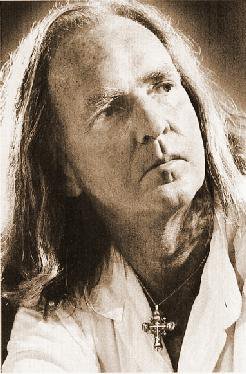
An acquaintance recently stumbled across some old musings of mine on the Arts Journal site. It brought memories flooding back of memorable conversations with enigmatic, deep, controversial composer John Tavener.

originally posted @ August 6, 2004 10:46 am as a comment on Arts Journal

During two years as General Manager of Soundstreams Canada, a new music concert presenter in Toronto, Canada–the conversation we hosted that most animated the music community here was a lecture given by Sir John Tavener. He was in town at our invitation for a concert we were presenting of his music. It might be added that unlike the small attendance at most new music concerts, this was an SRO concert. We crowded about 1200 into an 1100 seat cathedral and had to send hundreds home in disappointment. Clearly this is a voice that is reaching people musically.


Prior to John’s arrival, he and I had discussed by phone, the fact that both the music community and the theological community wanted to sponsor a lecture and there was insufficient time in the schedule for two such events. At his suggestion, and with the cooperation of the two sponsoring faculties, we had combined the two into a lecture entitled, “The vocation of the sacred artist”.

In the lecture Tavener presented the view that music had a purpose and that purpose was to reach the soul of individuals in an uplifting, encouraging and enobling way. The purpose of music was fulfilled when the audience left the concert hall feeling troubles lifted and with a desire for a better world, filled with beauty. He continued in voicing the opinion that music had lost its way when composers began to use music as a way to express their personal tragedy and turmoil, unloading that depression and tortured visions on the audience. In so doing, he continued, the composer was contributing to a negative world-view and the entropy of a corrupted civilization.

Although I found myself uncomfortable with a certain black-and-white nature to his arguments, I found myself fundamentally agreeing. The idea that “if the world is to be saved, it will be saved by beauty”– a Tavener quote that so struck me that I made it the featured quotes in our marketing campaign–was certainly the central theme to my own love of music and what I want to achieve in music and also what is at the root of my own assessment of “good music” and “bad music”. I don’t necessarily want music to make me “feel good” but I want to leave the concert hall with the sense that my soul has been touched and nourished.

Tags: , , , ,